Quality Solar Installations

0412 534 880
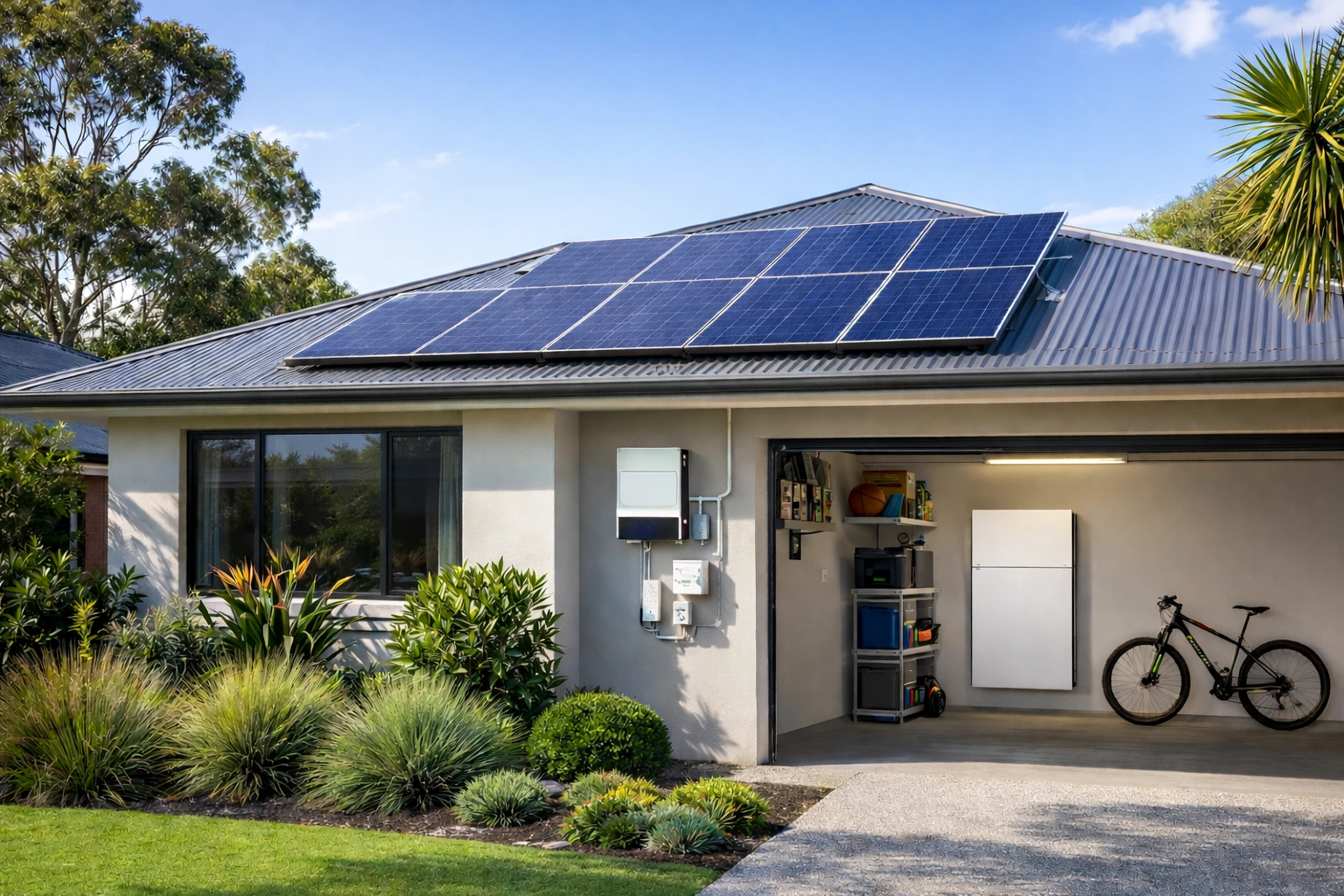
Avoid costly installation mistakes with solar batteries in Central Coast homes. Learn how sizing, compatibility and location errors reduce performance and how to protect your investment.
Solar batteries are transforming how Central Coast households use and store energy, yet many systems never achieve the performance their owners expect. The problem is not usually the technology behind solar batteries in Central Coast, but avoidable installation mistakes that quietly limit output or shorten battery life or even create reliability issues. Freedom Solar & Batteries has seen how choices made before and during installation can have long-term consequences for savings and day-to-day convenience. Understanding where things commonly go wrong helps homeowners ask the right questions and avoid performance problems before they start.
This guide provided by Freedom Solar & Batteries examines why installation quality matters and how decisions about battery size and system design directly affect results. Readers will see how choosing the wrong battery capacity for household energy needs can undermine return on investment or how poor installation locations and environmental exposure can damage equipment and how compatibility problems between solar panels and battery systems can lead to frustrating faults. The guide also highlights typical electrical installation and configuration errors, the risk of overlooking future energy needs when sizing and planning a system and the key checks homeowners should carry out before solar battery installation begins. By the end, homeowners will be better equipped to work with their installer while protecting their investment and ensuring that their new battery delivers the performance their property deserves.
For many homeowners living near the coastal areas, the main focus is on panel size and battery capacity. However, the way the system is designed and mounted often has more impact on real-world performance than the brand on the battery. A premium battery that is poorly installed can deliver less usable power than a modest system that is set up correctly.
Reputable technicians regularly inspect systems that look fine from the street but are quietly wasting energy or reducing battery life or even falling short of what was promised. Careful installation is what turns theoretical performance on the datasheet into reliable savings on the power bill.
Installation quality begins with design. The layout of panels or the size of the battery and the way the inverter and battery interact must match the home’s usage pattern and local network rules.
If a battery is undersized for an evening-heavy household, it will frequently run flat before the peak tariff period ends. Oversize it without enough solar to charge it, and the battery will sit partially empty most days. This wastes potential and may reduce value for money. Poor circuit selection is another issue. If essential loads like fridges or lighting and Wi-Fi are not wired correctly to the backup side of the system, the homeowner can lose power during an outage even though the battery is installed.
Ausgrid and Essential Energy have specific export limits and connection requirements. A quality installer designs within these rules so the system operates smoothly rather than being throttled back by the network or forced to shut down under certain conditions.
Every cable run connection and protection device affects how much of the solar energy actually reaches the battery and the home. Loose or undersized cabling can create voltage drop that reduces charging efficiency, so the battery fills more slowly or never quite reaches the usable capacity shown on the label.
Poor terminations at isolators or the battery can also create hot joints. This not only wastes energy as heat; it can lead to premature component failure and serious safety risks. A neat and well-planned install keeps DC cable runs short, uses correct cable sizes and ensures tight and correctly torqued connections for safety and performance.
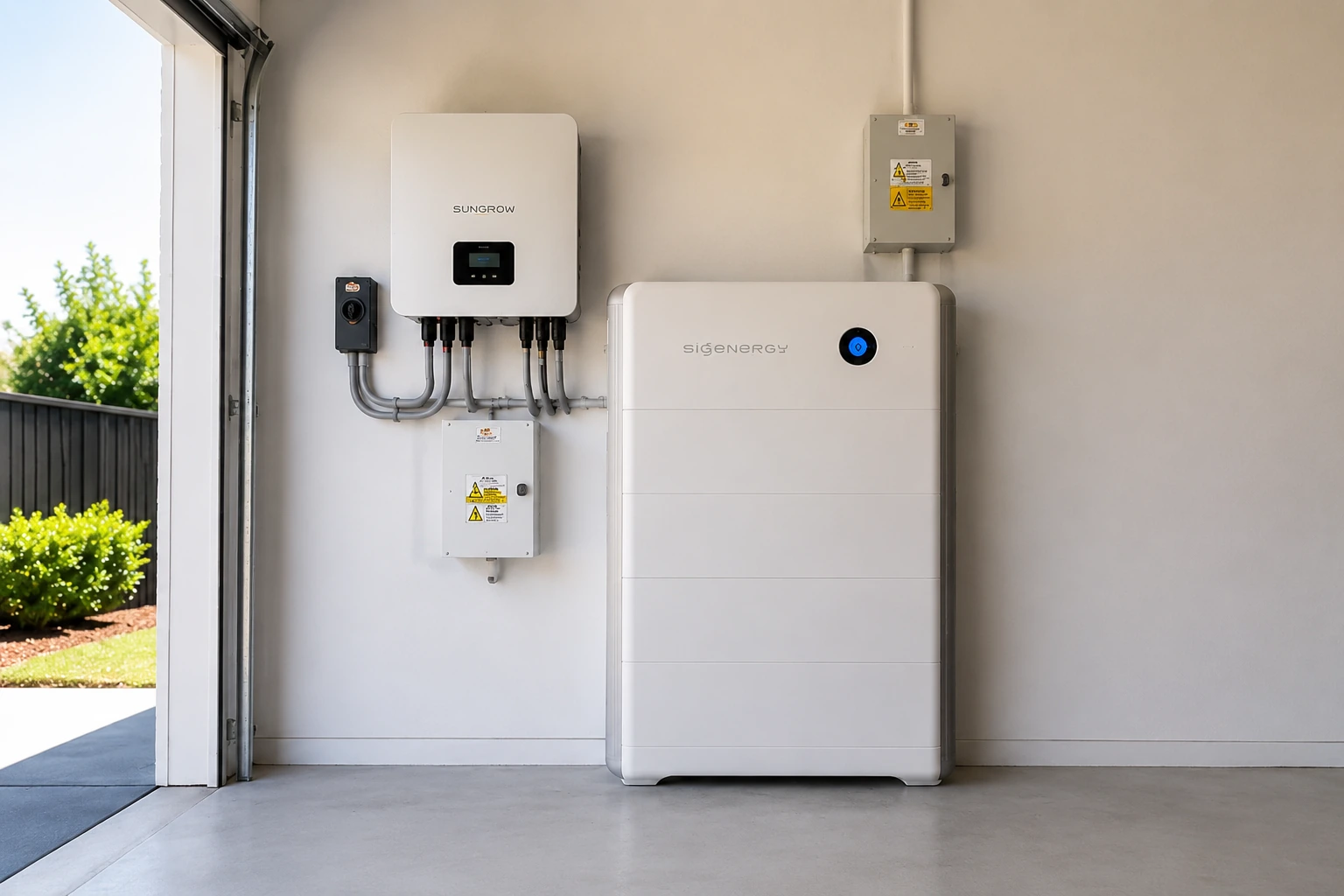
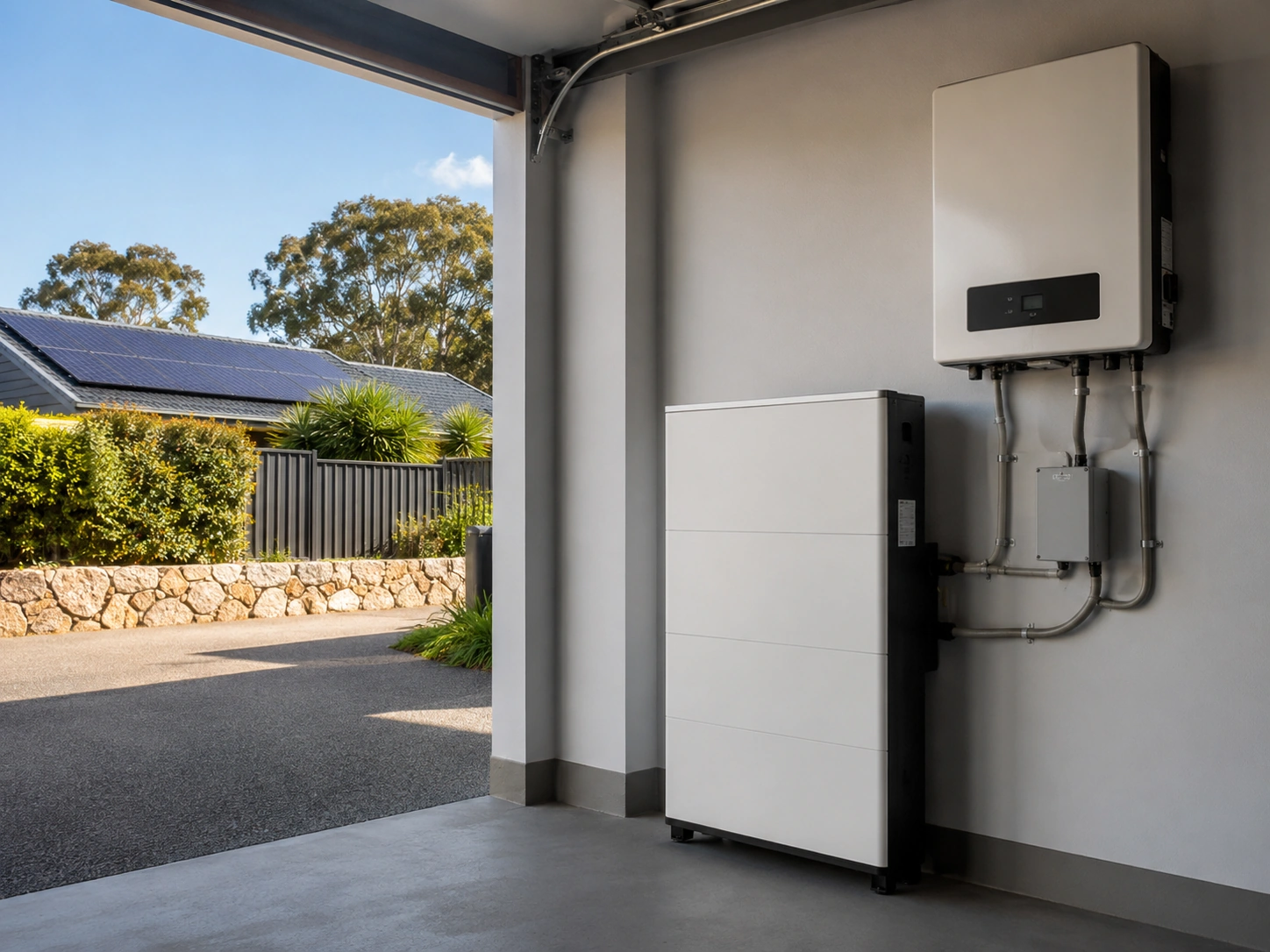
Positioning matters as well. If the battery is placed in a poorly ventilated garage corner or in direct afternoon sun, its temperature can rise above recommended levels. Modern lithium batteries protect themselves by reducing charge and discharge rates when they get too hot, which can noticeably cut available power on the hottest Central Coast days.
Even when the hardware is high quality, a rushed setup can undo the benefits. Correct commissioning includes updating firmware settings and charging and discharging limits and configuring time-of-use settings that match the home’s tariff.
If the battery is left on factory default settings, it may discharge when grid power is cheap and hold back when tariffs peak. Incorrect CT clamp orientation or placement can cause the system to “see” household usage incorrectly, which leads to the battery not charging fully or not discharging when it should.
A careful installer tests operation under different loads while confirming that backup circuits work and showing the homeowner how to monitor performance. This final step is often skipped, yet it is essential to ensuring the system delivers the long-term performance and bill savings the homeowner expects.
Choosing the wrong battery size is one of the most common mistakes that reduces the performance and value of a home solar system. If the battery is too small, it will run out early in the evening and rely heavily on grid power. If it is too large, it may never fully charge. This can shorten battery life and waste money on unused capacity.
Expert installers focus on matching battery capacity to each coastal household’s actual usage patterns. This requires more than a rough guess and should be based on real data and a clear understanding of how and when the home uses electricity.
An undersized battery might look cheaper upfront but usually costs more over time. It will often be fully charged by mid-morning and then sit idle while excess solar is exported at a low feed-in tariff. In the evening it will discharge quickly, and the home will switch to grid power during the most expensive peak rates.
Common signs a battery is too small include the battery hitting 100% by late morning on most sunny days, frequent emptying before midnight and little to no backup capacity during outages. For example, a family running air conditioning and cooking appliances and entertainment systems at night will usually need more storage than a small 5 kWh unit.
An undersized system also reduces the benefit of future additions such as an electric vehicle or pool pump, as there is no storage buffer to support higher demand.
Oversizing has different but equally serious drawbacks. A battery that is much larger than the available solar generation or household demand may sit partly charged most of the time. Many modern lithium batteries perform best when they regularly cycle through a healthy charge range. Chronically low cycling can reduce the return on investment and (in some cases) affect long-term performance.
Many homes in coastal locales have 5 to 8 kW solar systems. Pairing this with an excessively large battery (for example 20 kWh when the home uses only 8 to 10 kWh overnight) can mean the battery rarely reaches full charge outside of summer. This can leave owners paying for capacity they rarely use while stretching out the payback period well beyond what they expected.
A correct battery size is based on measured usage, not estimates. Ideally, at least 12 months of electricity bills or smart metre data should be reviewed so seasonal patterns are captured. The key figures our team looks at are:
As a broad guide, many coastal homes end up with 7 to 13 kWh of storage (the right size varies widely). Expert designers also factor in local tariff structures or outage tolerance and future plans such as adding an EV, so the system installed today still fits the home 5 to 10 years from now.
Battery location is one of the most common and costly mistakes in solar storage installations. Even a high-quality battery system can lose capacity or suffer premature failure or create safety risks if it is placed in the wrong spot or exposed to harsh conditions. For homes and businesses that are located near coastal areas, this often comes down to heat or moisture and limited airflow.
Expert technicians carefully assess where a battery will sit and how exposed it is to coastal conditions. Getting this right helps the system deliver its rated capacity while extending its lifespan and staying compliant with Australian standards and manufacturer warranties.
Lithium batteries are very sensitive to temperature. Prolonged exposure to temperatures above about 30°C can speed up chemical degradation inside the cells. This reduces usable capacity and can void the warranty. In costal climates, that risk is highest in roof spaces or small unshaded sheds and west-facing brick walls.
Common location mistakes include mounting batteries:
A better approach is to choose a cool and well-ventilated area such as a garage wall away from direct sun, or maybe a carport with a solid roof (or even an external wall under a veranda). Expert technicians check ambient temperature ranges and ensure there is clearance around the battery for airflow as required by the manufacturer. Where an outdoor-rated unit is used, it should still be kept out of direct afternoon sun to limit heat buildup.
The Central Coast’s marine environment means a higher risk of salt mist and corrosion. Installing non-weather-rated batteries in exposed outdoor areas can lead to corroded terminals or damaged inclosures and water ingress that impacts performance or safety.
Common errors include:
Professional technicians select locations where the battery is protected from direct rain and standing water. For homes near the coast, they recommend higher IP-rated equipment and shielded positions such as under eaves with side protection or inside garages. Simple measures like mounting batteries off the floor and away from garden beds or hose points significantly reduce moisture and corrosion risks.
Poor placement can also impact how safely and easily a system can be serviced. Batteries must be installed with specific clearances from gas appliances with their ignition sources and escape paths in line with Australian Standards and manufacturer instructions.
Typical mistakes include locating batteries:
Reputable technicians plan locations that allow safe working space for electricians while providing clear access for inspection and compliance with setback rules from doors and windows. This not only protects safety but also makes future maintenance or warranty work faster and less disruptive, which helps keep the system performing at its best.
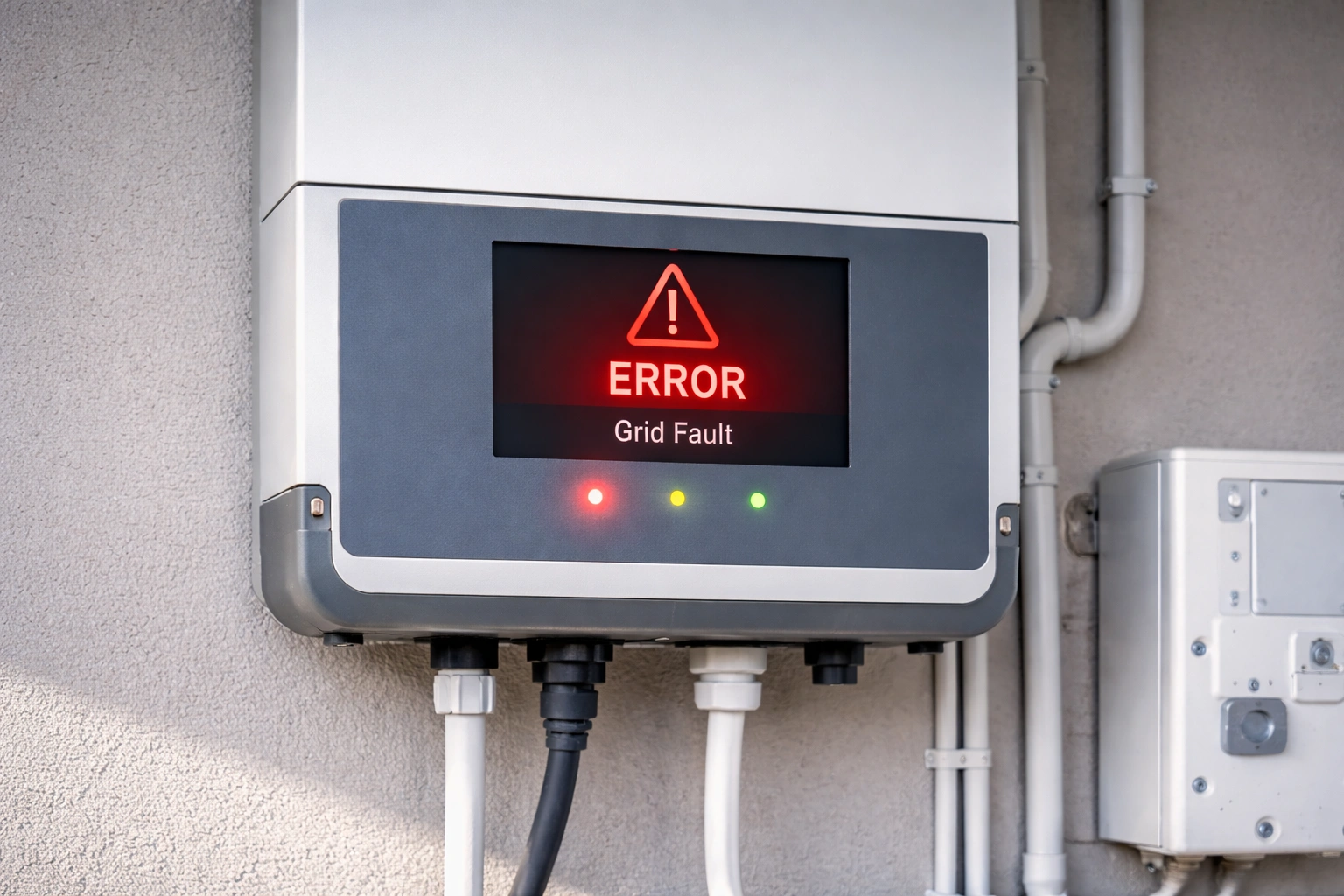
Many performance issues in home solar and battery setups come down to poor compatibility between the panels or inverter and battery system. Even quality products can underperform or shut down if their electrical characteristics and communication protocols are not properly matched. This often shows up in properties near the coastline as lower-than-expected savings or frequent inverter errors and even a battery that hardly charges.
Getting compatibility right starts at the design stage. It is not enough to choose reputable brands. The system needs to be engineered so that voltages and currents, or power ratings and software controls are all aligned. Poor assumptions like “It is a 10 kW inverter, so any 10 kW of panels will do” are what lead to everyday problems.
The solar array must be designed within the inverter’s specified DC voltage and current window. If the panel strings are too high in voltage, the inverter may disconnect on hot days to protect itself. If they are too low, the inverter will not reach its most efficient operating range and production will suffer.
Panel and inverter ratings also need to reflect local conditions. The coastal climate has cool winter mornings that can drive panel voltages higher than their nominal rating and hot summer afternoons that push temperatures and currents up. Our team always checks:
Skipping these checks can result in clipping losses or nuisance shutdowns and even warranty issues if components are used outside their specifications.
Battery systems need to match how the solar is connected. With AC‑coupled batteries, the battery has its own inverter and connects on the AC side. Almost any solar inverter can work provided the monitoring and control are set up correctly. If the solar inverter regularly pushes close to the home’s maximum grid connection limit however, the battery may be unable to charge at full power when the sun is strongest.
With DC‑coupled all‑in‑one systems the solar panels and battery are tightly integrated. In this case, panel voltage ranges or maximum DC power and fast charge and discharge rates must be within the battery inverter specifications. Using a high-power battery with an undersized hybrid inverter will cap charge and discharge speeds, so the battery cannot respond well to Central Coast afternoon peaks.
Modern batteries rely on digital communication with the inverter or energy management system. If brands or models are not on each other’s approved compatibility lists, the system may fall back to basic “dumb” operation or not work at all.
Common problems include:
Expert technicians will always check manufacturer compatibility charts and required firmware versions before designing a system. Proper commissioning (including updating inverter and battery software and setting correct export and charge limits) is essential to avoid long‑term performance loss.
Even high-quality solar batteries can underperform if the electrical installation or system settings are wrong. Many performance issues in homes around coastal areas come from wiring mistakes or poor protection device selection or even incorrect programming of the battery and inverter rather than from the hardware itself.
Professionals focus on correct design with neat wiring and careful commissioning so the system charges efficiently while supporting backup where required and complying with Australian Standards and local network rules.
Improper cable sizing or layout can cause excessive voltage drop, so the battery and inverter never operate at their rated capacity. Long cable runs between the battery and inverter that are not upsized to suit the distance waste energy as heat and can limit charging current. Tight cable bending with mixed cable types or loose terminations can also increase resistance and lead to hot spots.
Protection devices must be matched to the battery chemistry and current ratings. Common errors include using AC circuit breakers on DC circuits, or using fuses or breakers with the wrong current rating, and even omitting required DC isolators near the battery and inverter. These mistakes can lead to nuisance tripping that interrupts charging or (in the worst case) safety hazards.
Correct earthing and bonding are essential for both safety and performance. Batteries and inverters must be installed following AS/NZS 3000 and AS/NZS 5139, including proper MEN connections where applicable and correct separation of AC and DC wiring. Poor segregation of AC and DC conduits or running data cables in the same conduit as power cables can introduce interference and unreliable monitoring.
Even if the wiring is neat, the system can underperform if the inverter and battery settings are wrong. Common issues include:
For homes that expect backup during blackouts, the backup circuits must be wired and configured correctly. A frequent mistake is connecting high-demand appliances like ducted air conditioning or large electric ovens to the backup circuit, where they overload the inverter capacity. Another is not clearly labelling which circuits are backed up, which leads to confusion when the grid fails.
Smart technicians programme systems so that backup power is reserved for essential loads such as lighting or refrigeration, and even internet and a few power points. Test operation by simulating a grid outage during commissioning.
Ausgrid and Essential Energy have strict rules on export limits and voltage rise. Incorrect settings in the inverter, such as the wrong network profile or export control configuration, can cause the inverter to ramp down or trip off during peak solar production. This reduces both solar generation and battery charging performance.
If export-limiting hardware like smart metres or external controllers is miswired or not correctly paired with the inverter, the system may assume a zero export limit at all times. Ensuring all devices are configured to the correct DNSP profile and verifying real-world operation through monitoring helps the system deliver the best possible performance within local grid rules.
Many Central Coast homeowners size a solar battery based only on their current power bills and forget that energy use typically grows over time. This can leave a new system struggling to keep up just a few years after installation, reducing both savings and backup reliability. Planning ahead helps ensure the battery delivers value for 10 to 15 years, not just the first couple.
Homeowners should consider how their household and lifestyle may change over the life of the battery. Increases in occupancy, working from home, installing air conditioning, adding a pool, or purchasing an electric vehicle can all significantly raise energy demand. Careful planning at the outset helps avoid costly upgrades or complete system replacements later.
The first step is to look beyond last year’s electricity bills. Homeowners should consider:
These changes can significantly increase daily consumption and evening peak demand. Professional solar repairs will usually ask about these scenarios during the design stage so battery capacity and solar size are not locked in at today’s minimum needs.
Large new appliances can quickly make a well-sized system feel too small. Before installation begins, homeowners should discuss:
For example, an EV can add 10 to 20 kWh per day on its own. If this is not factored into the initial design, the battery may not have enough capacity to charge the car overnight and still cover household needs. Expert installers can design the wiring with the solar array size and battery capacity so there is room to integrate these loads later without major rework.
Future proofing is not just about kWh capacity. It is also about choosing equipment and a layout that can grow. Before installation, homeowners should confirm:
Many homes in the coast have limited roof space or older switchboards. Professional installers can assess these constraints upfront, then recommend a staged approach such as installing a slightly larger inverter now or designing the battery location with clear space for expansion. This keeps options open as technology prices drop and household needs change.
Strong outcomes begin with informed questions. Understanding how the system will be designed and commissioned reduces the risk of disappointment.
Homeowners should confirm compatibility while verifying compliance with standards and ensure future needs are part of the conversation. Monitoring access and transparent warranty terms are equally important.
When these fundamentals are addressed early, storage becomes a dependable long-term asset. Proper design and workmanship allow the system to deliver consistent savings and reliable backup with the confidence that the investment will continue to perform well into the future.
When homeowners invest in solar and battery storage, they are not just buying hardware but investing in long-term energy resilience with savings and independence. This is why it is so important for homeowners to be proactive before installation begins. Confirm that the proposed battery capacity matches your real load profile and not a generic estimate. Check that your solar and battery components are designed to work together as an integrated system. Ensure the installer has carefully considered environmental exposure and access for maintenance when choosing a location. Ask pointed questions about electrical protection and backup configuration so you understand exactly how the system will behave in different scenarios. Finally, review whether the system design allows for future expansion without costly rework.
By taking these steps and partnering with an experienced and detail‑focused installer, homeowners can avoid the most common and financially damaging mistakes. A well‑designed and properly installed solar battery system will deliver reliable performance and meaningful backup power for many years. The difference between a frustrating system and a great one is rarely the equipment itself, as it is the quality of the installation and forward planning that sits behind it.