Quality Solar Installations

0412 534 880
Are home batteries worth it in 2026? Learn about current rebates, upfront costs and real savings for Australian households considering solar battery storage.
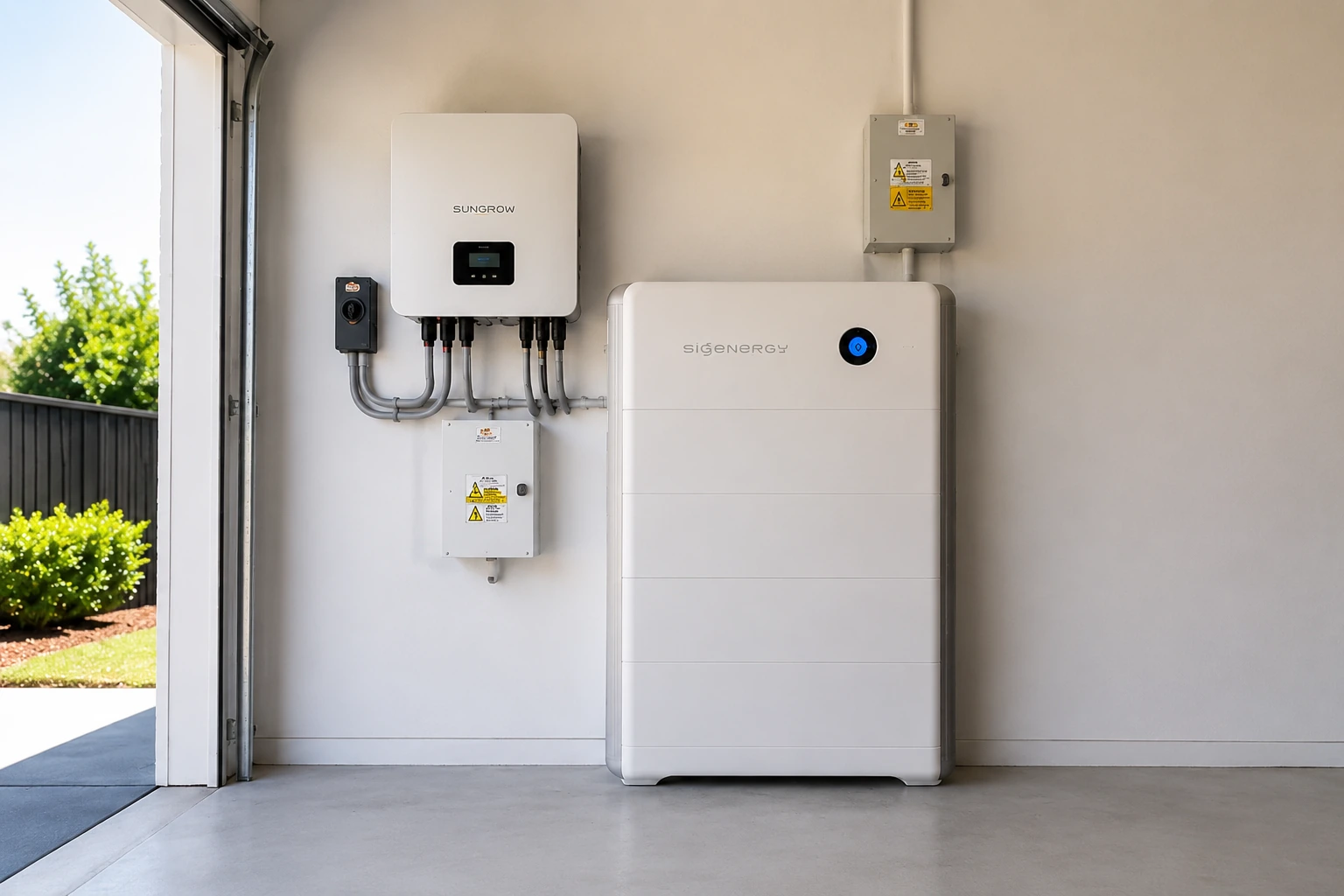
At Freedom Solar & Batteries, we regularly speak with homeowners weighing up whether solar batteries in Central Coast homes are actually worth the investment in 2026. Electricity prices continue to rise, feed-in tariffs are shrinking and online advice is often either overly optimistic or unnecessarily negative. While home battery systems are now far more common across Australian suburbs, popularity alone does not mean they deliver real value for every household.
For homeowners researching solar batteries in Central Coast areas, the real question is not whether batteries are available or widely promoted, but whether they make financial and practical sense for how energy is actually used day to day. Rebates, installation costs, household consumption patterns and long-term electricity pricing all play a role in determining whether a battery delivers genuine savings or simply shifts costs around.
This article breaks down how rebates affect the real cost of solar batteries in Central Coast homes, how savings are generated in practical, everyday scenarios and what realistic payback looks like in 2026. By focusing on real-world examples rather than sales claims, the aim is to help you make a confident, informed decision based on data, not guesswork.
Rebates are usually the first thing homeowners ask about, and understandably so. They can make batteries feel far more affordable at first glance. However, this is also where many expectations and realities start to diverge. To make a sound decision, it helps to understand how incentives work behind the scenes and what role they should realistically play in your calculations.
Battery incentives in Australia operate very differently from solar panel rebates. Solar incentives are federally supported and relatively stable, while battery incentives are usually introduced at a state or network level with limited funding and strict conditions.
In 2026, most battery incentives fall into a few broad categories:
These programmes are designed to influence grid behaviour rather than guarantee long-term savings for every household. Once budgets are exhausted or targets are met, incentives can be reduced or removed quickly. This is why neighbours installing batteries at different times often receive very different offers.
This is the point where many homeowners get caught out. Rebates sound generous, but they usually apply to only part of the system cost.
They usually do not reduce:
Rebates usually do not reduce:
When these costs are added back in, the final price often looks very different from the headline rebate figure. Budgeting for the full system cost upfront avoids disappointment later.
Rebates can certainly help with affordability, but they should never be the main reason to install a battery. Incentives are temporary by nature, while energy usage patterns and electricity pricing trends are long-term.
A battery decision should still make sense if:
If the numbers only work while an incentive exists, the system may struggle to deliver meaningful value over its full lifespan.
Once rebates are understood, most homeowners move straight to the next big question: how long will it take to pay for itself? This is where battery discussions often become oversimplified. There is no universal payback period because no two households use energy in exactly the same way.
Battery prices have improved, but they remain a long-term investment rather than a quick win. In 2026, most quality home battery systems in Australia cost between $9,000 and $15,000 installed, depending on size, brand, backup capability and the condition of existing electrical infrastructure.
What homeowners should realistically expect:
At this stage, the biggest gains do not come from installing the largest battery available. They come from choosing the right size and managing how energy flows through the home.
This is where batteries often make the biggest difference. Feed-in tariffs across Australia have continued to fall, meaning exported solar is now worth far less than it once was.
Batteries change the equation by allowing households to:
Rather than selling energy at a low rate and buying it back later at a premium, batteries help keep more value inside the home.
From real-world experience, payback varies significantly depending on lifestyle and energy habits.
In areas with strong solar adoption, such as homeowners researching solar batteries in Central Coast communities, matching battery size to actual export data often delivers better results than installing a larger system “just in case”.

One of the most important parts of this decision is recognising that batteries are not right for every home. Understanding where they perform well and where they struggle helps set realistic expectations.
Based on real household outcomes, batteries tend to deliver the most value for:
When several of these factors apply, batteries often deliver both financial savings and lifestyle benefits.
There are also situations where batteries may not deliver strong returns, even if rebates are available.
Batteries may offer limited value when:
In these cases, improving energy efficiency or optimising solar performance can often deliver better results.
Before committing to a battery, it helps to step back and answer a few practical questions honestly:
Clear answers usually make the decision far simpler.
By 2026, home batteries are no longer experimental, but they are still not a one-size-fits-all solution. For the right Australian households, they can reduce electricity bills, improve energy independence and provide protection against long-term price rises. For others, waiting or focusing on efficiency first may be the smarter move.
At Freedom Solar & Batteries, our approach is straightforward. The best battery decisions come from realistic expectations, clear data and long-term thinking. When a system is sized properly and installed for the right reasons, a home battery becomes a genuine energy asset rather than an expensive add-on.