Quality Solar Installations

0412 534 880

Learn how Australia’s 2026 home battery rebate changes affect upfront costs, battery sizing, installation timing and long-term solar storage value.
Federal support for home battery storage is changing in 2026, with direct impacts on upfront costs, system sizing and installation timing. For homeowners exploring solar batteries on the Central Coast, understanding how Australia’s Cheaper Home Batteries Program works is essential before committing to a project or delaying a decision. Freedom Solar & Batteries explains how the current rebate operates, what changes from May 2026 and how different buyer scenarios may influence the right timing and structure for a battery installation.
Australia’s federal battery rebate is delivered through the Cheaper Home Batteries Program, which started on 1 July 2025. The program provides an upfront discount on eligible small-scale battery systems connected to new or existing rooftop solar. Rather than being claimed later through a tax return, the discount is generally applied through participating solar and battery retailers or installers.
From 1 May 2026, the way the rebate is calculated changes. The rebate will continue to support eligible battery installations, but the discount will decline more quickly over time and become tiered based on battery system size. This means homeowners need to pay closer attention to usable capacity, installation timing and whether the proposed system is properly matched to their household’s needs.
For Central Coast homeowners considering a battery, the change is important because it affects both the likely upfront discount and the long-term value of the system. A battery that is installed before a rebate adjustment may receive a different level of support from one installed after the change takes effect.
The Cheaper Home Batteries Program is linked to the Small-scale Renewable Energy Scheme, commonly known as the SRES. Eligible battery systems create Small-scale Technology Certificates, or STCs, based on their usable capacity and the rules in place at the time of installation.
In practical terms, most homeowners do not usually manage the STC process themselves. The installer or retailer generally applies the value of the STCs as an upfront discount on the quoted price, then manages the certificate process behind the scenes. This is why it is important to compare written quotes carefully and confirm how the rebate has been applied.
Eligible systems must meet program requirements, including approved product, installation and compliance standards. The battery must also be connected to a new or existing rooftop solar system, so standalone batteries that are not connected to solar are not the focus of this Australian rebate.
From 1 May 2026, the rebate becomes more closely tied to battery size. The Clean Energy Regulator has confirmed that the STC factor will taper according to the amount of battery capacity installed.
Under the updated structure, the rebate support is strongest for the first portion of usable battery capacity and reduces for larger systems. From 1 May 2026:
This does not mean larger batteries are unsuitable. It simply means the financial benefit needs to be considered more carefully. A larger battery may still make sense for a home with high evening electricity use, backup power requirements, EV charging needs or plans to participate in a virtual power plant. However, oversizing a battery purely to maximise a rebate may not deliver the best return.
The right battery size should be based on household energy use, solar generation, evening consumption, backup needs and the way the home is billed for electricity.
Rebate timing matters because the discount is linked to the rules in place when the system is installed and eligible STCs are created. From 2026, the rebate is scheduled to decline every six months, which means delaying a battery installation can reduce the available discount.
This is especially important for homeowners who are already planning to install a solar battery in the near future. Waiting too long may mean the system falls into a lower rebate period, particularly if installation demand increases before a scheduled change.
There are also practical timing issues to consider. Battery installations may involve site inspections, product availability, electrical upgrades, network requirements and compliance paperwork. If many homeowners try to install before a rebate adjustment, installer availability can become tighter.
A signed quote is not the same as a completed installation. Homeowners should confirm when the system can realistically be installed, commissioned and documented, not just when it can be ordered.
For Australian rebate purposes, documentation is important. The relevant installation date is closely tied to compliance paperwork, including the certificate of electrical compliance or the equivalent required in the relevant state or territory. STCs for eligible systems can generally be created within a 12-month window from the date that certificate is issued.
This makes proper installation records essential. Homeowners should ensure their installer provides clear documentation showing the battery model, usable capacity, installation date, compliance details and how the rebate has been applied to the final price.
A vague quote or incomplete invoice can make it harder to understand whether the correct discount has been included. A clear line-item quote should show the battery system cost, installation cost, any additional electrical work and the rebate or STC discount separately.
The federal battery rebate is only one part of the financial picture. Some households may also be able to access state-based support, retailer offers or virtual power plant incentives. These incentives can change over time and may have their own eligibility rules.
For NSW homeowners, it is worth checking whether any current state or retailer battery incentives apply alongside the federal rebate. Some programs may require the battery to be connected to an approved virtual power plant, while others may offer payments or credits for allowing part of the battery’s capacity to support the grid during peak demand periods.
Stacking incentives can improve the value of a battery, but it can also add conditions. Before signing a contract, homeowners should ask whether participation in a retailer or VPP program affects backup power settings, export behaviour, reserve capacity or control over when the battery charges and discharges.
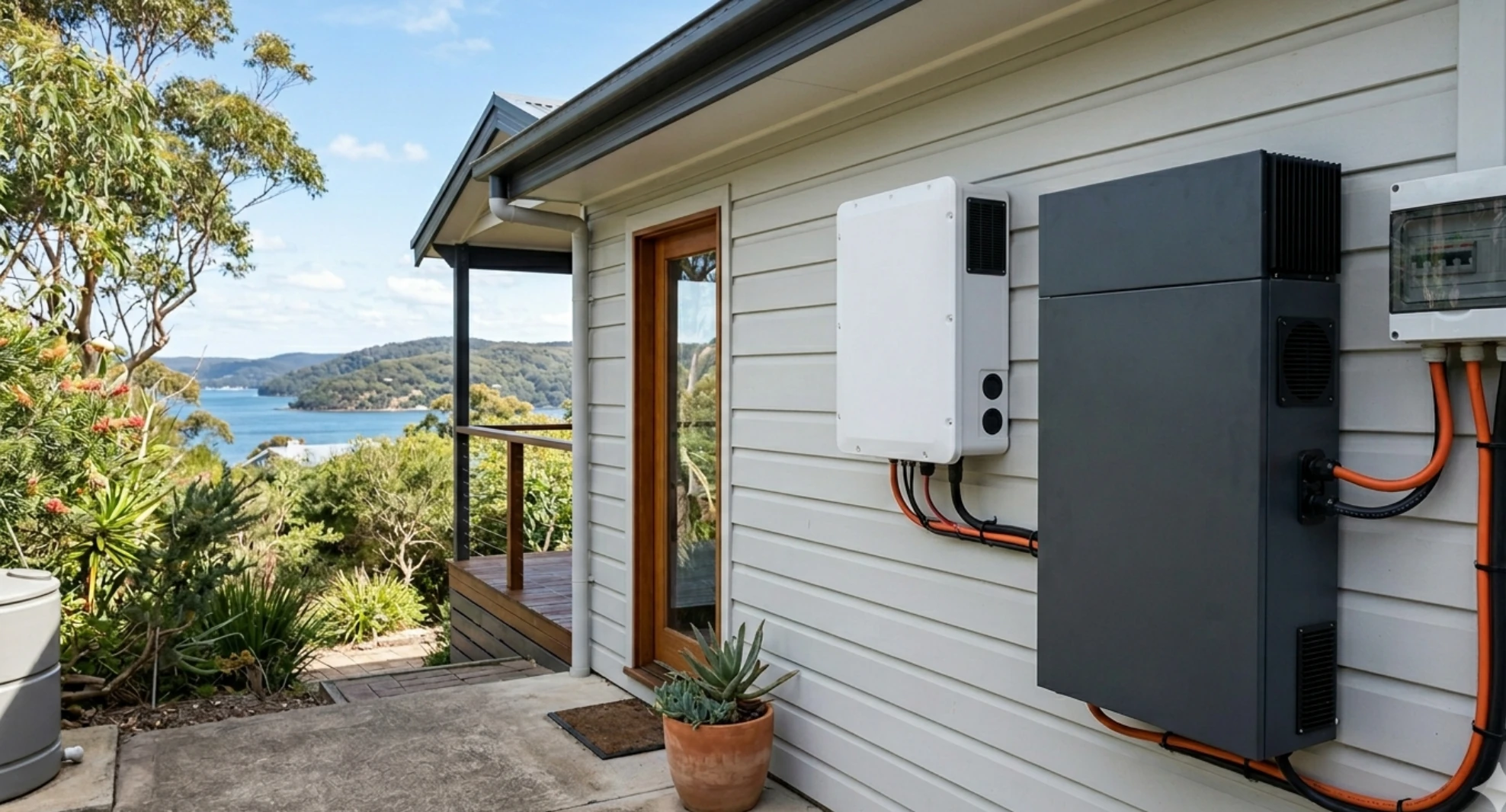
A rebate can reduce the upfront cost of a home battery, but it should never be the only reason for choosing a system. The wrong battery can still be poor value if it is too small, too large, incompatible with the existing solar system or unable to support the way the household actually uses power.
A good battery decision should consider compatibility, warranty, usable capacity, backup capability, installation quality and long-term operating costs.
Rebate-eligible equipment still needs to work with the home’s existing or planned solar system and electrical infrastructure. Not every battery integrates smoothly with every inverter, switchboard or energy management setup.
Before signing a contract, homeowners should confirm whether:
Some homes may need switchboard upgrades, backup circuit configuration or other electrical changes before a battery can be installed safely. These extra costs may not be fully covered by the rebate, so they should be clearly identified in the quote.
Not all batteries perform the same way, even when they qualify for the same rebate. Battery chemistry, usable capacity, cycle life, warranty terms and software controls can all affect long-term value.
Homeowners should ask what capacity is guaranteed at the end of the warranty period, how many cycles are covered each year, whether labour is included for warranty replacements and whether the system requires ongoing subscription fees for monitoring or advanced software features.
A cheaper battery may not always be the better option if it degrades faster, has weaker support or cannot be integrated with future energy needs. A stronger warranty and better long-term performance can make a higher-quality battery more cost-effective over a 10- to 15-year period.
For Central Coast homes, battery value is often shaped by local electricity use, solar generation and weather-related reliability concerns. Homes with high evening energy use, pool pumps, ducted air conditioning, home offices or EV charging may benefit more from a properly sized battery than homes with very low night-time consumption.
Backup power should also be considered carefully. Some batteries are designed to support selected essential circuits during an outage, while others can support more of the home depending on system size and electrical configuration. Homeowners should be clear about what they want the battery to keep running during an outage, such as fridges, lights, internet, medical equipment or work-from-home equipment.
The more specific these requirements are at the start, the easier it is to design a battery system that matches real household needs rather than simply chasing the largest available rebate.
Battery systems are increasingly being designed not only for household use, but also for participation in broader grid programs. Virtual power plants and managed battery programs can allow households to receive extra value from their battery, but they may also require the battery to be available for certain grid events.
Battery size can affect whether participation is practical. A very small battery may not leave enough spare capacity after normal household use, while a larger system may be able to reserve some capacity for backup and still contribute to grid support when required.
Future flexibility is also important. Homeowners should ask whether the battery can be expanded, whether it can work with future EV charging, whether software updates are supported and whether the system can adapt to new tariffs or retailer programs.
Homeowners who are most likely to benefit from a battery in 2026 are those who can combine the federal rebate with clear bill savings, backup value or future energy flexibility. The strongest candidates are usually households with good solar generation, high evening electricity use or a need for greater energy resilience.
A battery may be especially suitable for households that:
Not every home will see the same financial return. For some households, the main benefit will be bill reduction. For others, backup power and energy independence may be the stronger reason for installing a battery.
The 2026 rebate changes make good system design more important, not less. Because battery size now has a stronger influence on rebate value, homeowners should avoid choosing a system based only on the advertised discount.
A professional design should consider solar production, household load patterns, tariff structure, backup requirements, battery capacity, inverter compatibility and future expansion. It should also explain why a particular battery size is being recommended.
For many homes, a carefully sized battery will deliver better long-term value than simply choosing the largest system available. The goal is to install a battery that stores enough solar energy to be useful, supports the household during peak periods and qualifies for the appropriate rebate without unnecessary oversizing.
Australia’s home battery rebate changes in 2026 make timing, battery size and system design more important for homeowners considering energy storage. The Cheaper Home Batteries Program can reduce the upfront cost of an eligible battery, but the value of the rebate will change over time and from 1 May 2026 will be more closely tied to system capacity.
For Central Coast homeowners, the best approach is to look beyond the headline discount and assess the full picture. A suitable battery should match the home’s solar generation, evening energy use, backup needs, tariff structure and future energy plans. With the right design and installation timing, a solar battery can help improve energy independence, reduce grid reliance and provide stronger long-term value as rebate settings continue to change.